

Sidewalk Violation Removed at Historic 151 E 37th St
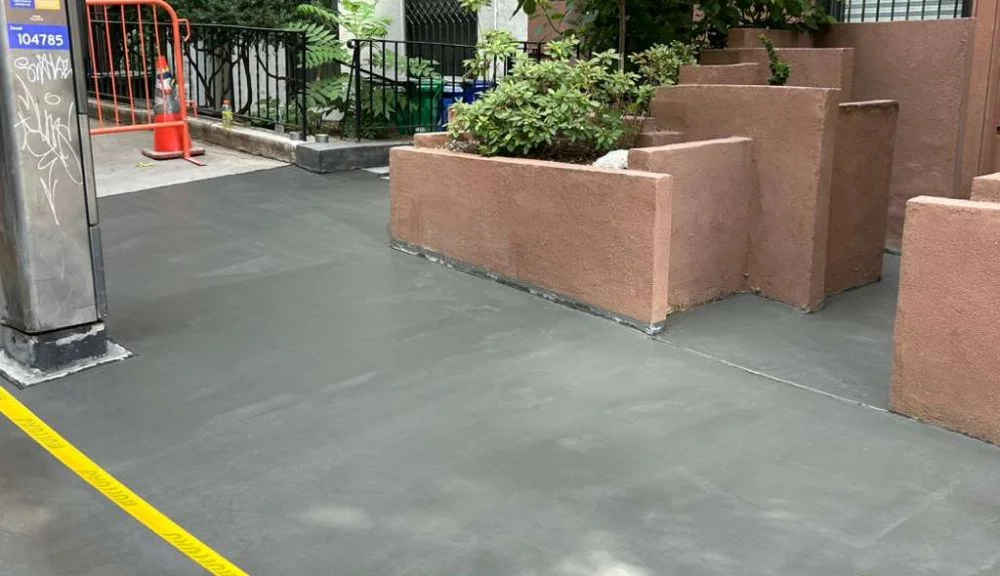
Project: Sidewalk Violation Removal in Manhattan, NY
Client: Residential Property Owner (Historic Brownstone)
Location: 151 East 37th Street, Murray Hill, Manhattan, NY 10016
Services Provided: NYC DOT Sidewalk Repair, Sidewalk Violation Removal, Permit Filing and Expediting, LPC Permit Application and Approval, Sidewalk Closing Permit, Final DOT Sign-Off
Total Sidewalk Area Repaired: Approximately 250 square feet / 10 slabs
Project Completion Time: Completed within the 75-day correction period specified in the NYC DOT violation notice
What Was the Challenge Behind this Project
151 East 37th Street is an early twentieth-century brownstone cooperative in the heart of Murray Hill, a few blocks from Grand Central Terminal and surrounded by some of Manhattan's busiest pedestrian corridors. Decades of foot traffic, seasonal freeze-thaw cycles, tree root pressure, and natural prewar-era settlement had left ten sidewalk flags cracked, uneven, and spalling at the edges, creating clear trip hazards on a heavily trafficked block.
The deterioration itself was a familiar problem. What set this project apart was the property's status as a designated historic brownstone. Any sidewalk replacement had to preserve the visual character of the streetscape, which meant the work couldn't move forward as a standard DOT repair. It required Landmarks Preservation Commission (LPC) review and approval on top of the usual permitting, a layer of complexity that, left unmanaged, often stalls historic-property projects for months and leaves co-op owners fielding agency paperwork themselves.
The Strategy Brooklyn Pros Followed
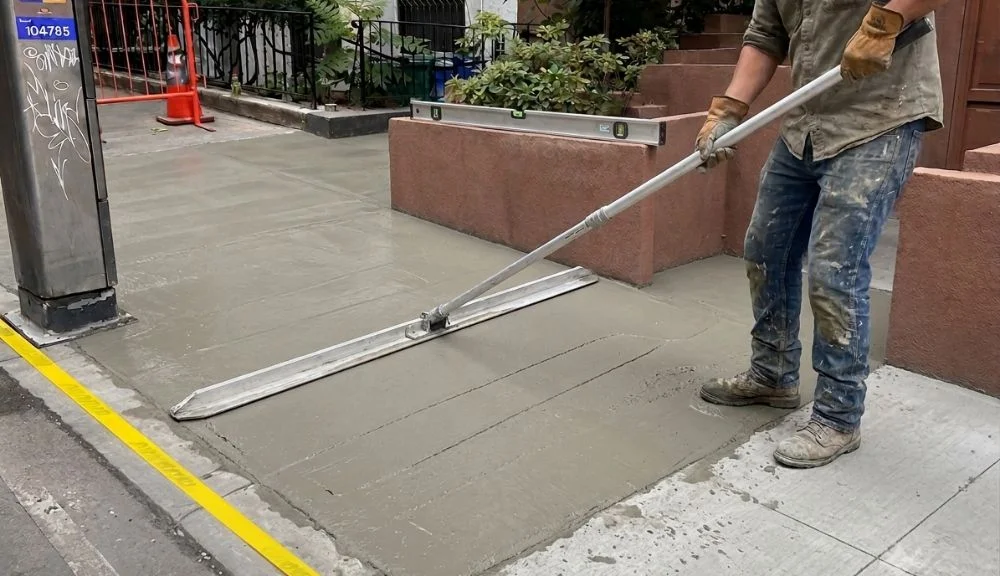
Rather than treating this as a routine slab replacement, our team at Brooklyn Sidewalk Repair Pros built the project around a coordinated, single-point-of-contact permitting strategy:
- Full permit stack, filed in parallel where possible: NYC DOT Sidewalk Repair Permit, Sidewalk Closing Permit, and LPC Permit Approval were all managed internally rather than leaving the co-op to coordinate separately with each agency.
- Material-matching as the core of the LPC case: Since the original flags were standard concrete, we presented LPC with a straightforward continuity argument — replacing like-for-like with the material already present on the block — rather than proposing a different finish that would have invited a longer review.
- Sequencing demolition and pour around DOT specs: Once approvals cleared, we demolished and hauled away the damaged sections, compacted the subbase, and formed the new flags to NYC DOT's standard dimensions before pouring 4,000 PSI concrete suited to heavy urban pedestrian load.
- Why this approach over alternatives: A property owner or co-op board pursuing permits piecemeal — DOT first, LPC after, closing permit separately — typically faces sequential delays, since each agency works on its own timeline. By front-loading the LPC material-matching argument and running the permit applications as one managed process, we compressed what could easily have been a 120+ day approval-and-construction timeline into 75 days.
The Results We Delivered
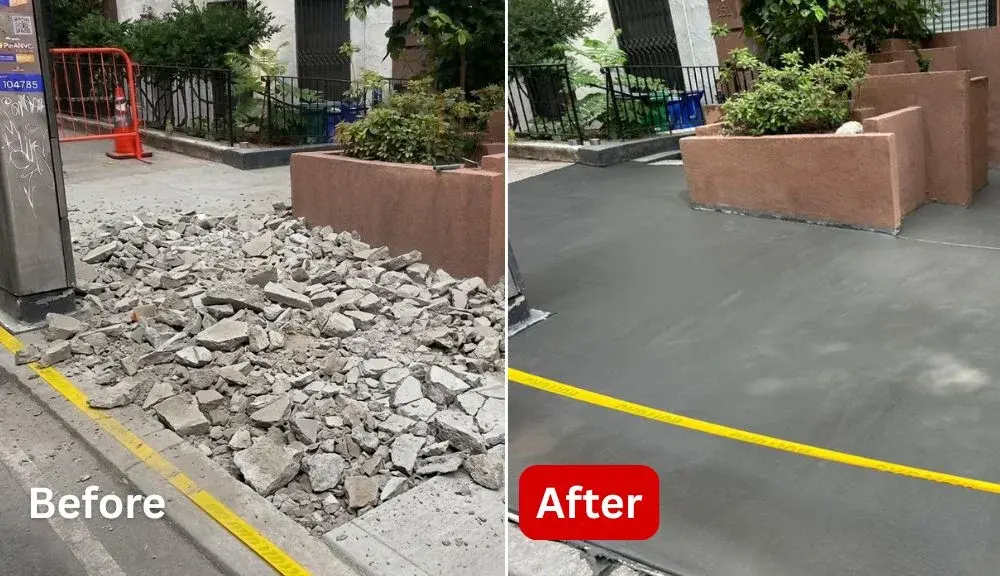
- Replaced 10 deteriorated sidewalk flags across ~250 square feet with 4,000 PSI concrete.
- Secured all three required approvals, DOT Sidewalk Repair Permit, Sidewalk Closing Permit, and LPC Permit, with no rework or rejected applications.
- Completed the full project, from permit acquisition through final DOT sign-off, in 75 days.
- Eliminated all identified trip hazards and height differentials on a high-traffic Midtown block near Grand Central.
- Delivered a finished sidewalk that preserved the historic streetscape's appearance, satisfying both DOT compliance and LPC character requirements simultaneously.
In the owner's words: "Having one team manage the permits, coordinate with the city, and make sure everything matched the existing appearance made the process much easier than we expected. In the end, the sidewalk looks great, and the whole project stayed on schedule."
Key Takeaway
Historic-property sidewalk repair isn't just construction projects, but it's permitting projects with construction attached. The biggest risk to timeline and budget isn't the concrete work itself; it's treating LPC review as a separate, sequential hurdle instead of building the construction plan around what LPC will actually approve. When the replacement material is already a like-for-like match to what's on the ground, leading with that argument, rather than waiting for LPC to ask, is what keeps a landmarked sidewalk repair on a normal-length timeline instead of stretching it into a multi-season ordeal. For brownstone owners, the real value of a single contractor managing DOT, LPC, and closing permits together isn't just convenience, but it's avoiding the compounding delays that come from agencies working in isolation.
What NY Has to Say
Read More ReviewsOur Latest Blogs
-
Why Concrete Is the Ideal Driveway Material
Concrete is perhaps the most popular choice of materials when it comes to sidewalks in New York City and, indeed, the entire country. And why is that? We'll tell you why: Concrete boasts some truly c […]
-
How to Handle DOT Violation Repairs for Your Sidewalk
If you own property in the NYC area, chances are, you're responsible for the upkeep of the sidewalks outside your building. Not only that, but you're also liable for any personal injuries that occur […]