Client: Residential property owner
Project Type: Concrete Sidewalk Repair in Brooklyn, NY
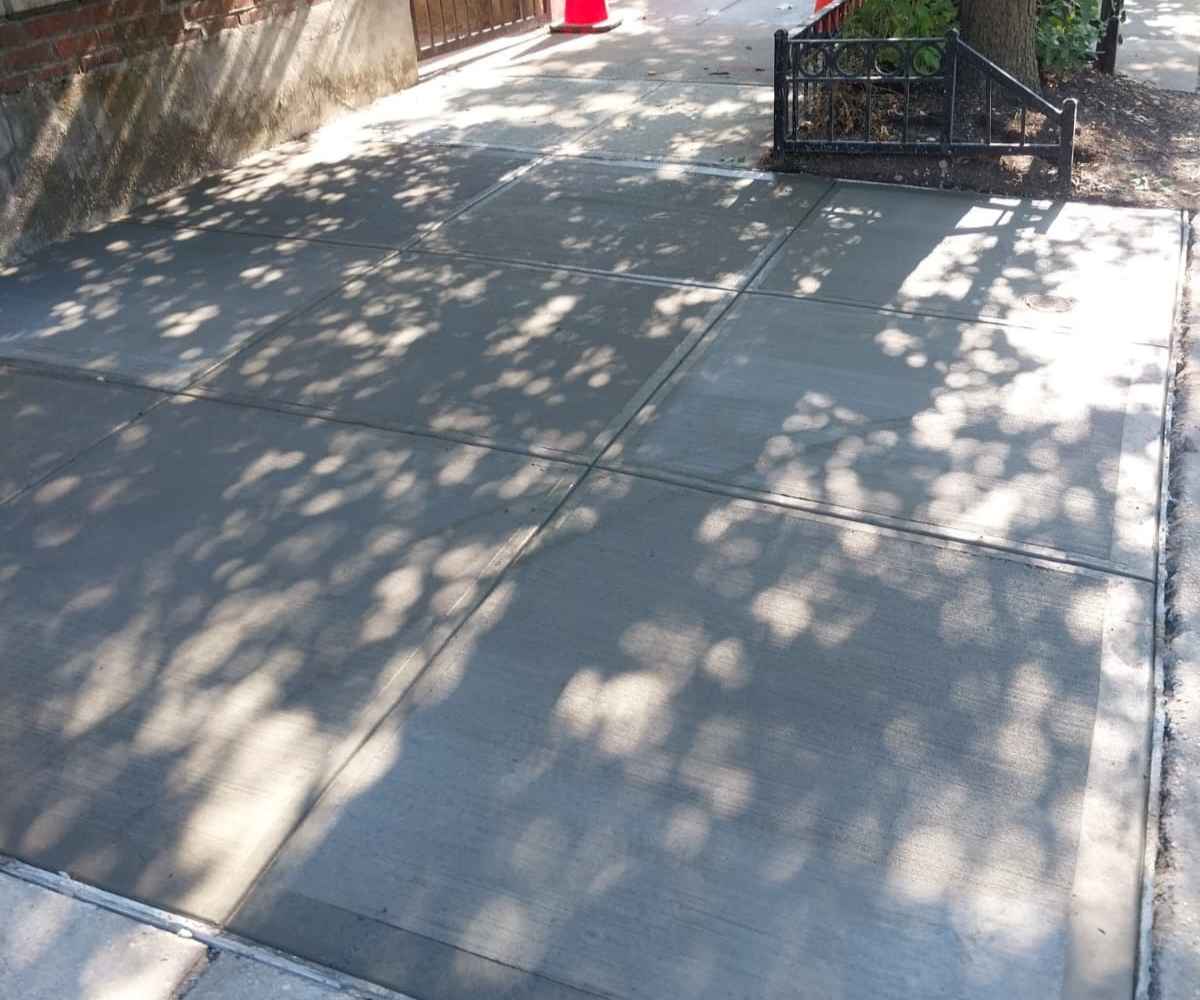
Total Area Repaired: 9 sidewalk slabs, approximately 225 square feet
Estimated Project Cost: $4,500, including $140 for the sidewalk repair permit
Project Timeline: Completed within the 75-day correction period specified in the violation notice
When the Tree Out Front Becomes the Problem
Street trees are one of the better things about a Brooklyn block. They shade the sidewalk, cool the pavement in August, and make a row of houses feel settled. What they also do, quietly and over many years, is grow underground.
That's what happened here. A city-owned tree near the property line had been sending roots out beneath the walkway in search of moisture and room. Concrete offers neither, so the roots did what roots do: they thickened, wedged themselves under the slabs, and lifted. Root growth exerts remarkable steady pressure, and given enough seasons, it wins against an unreinforced sidewalk panel every time.
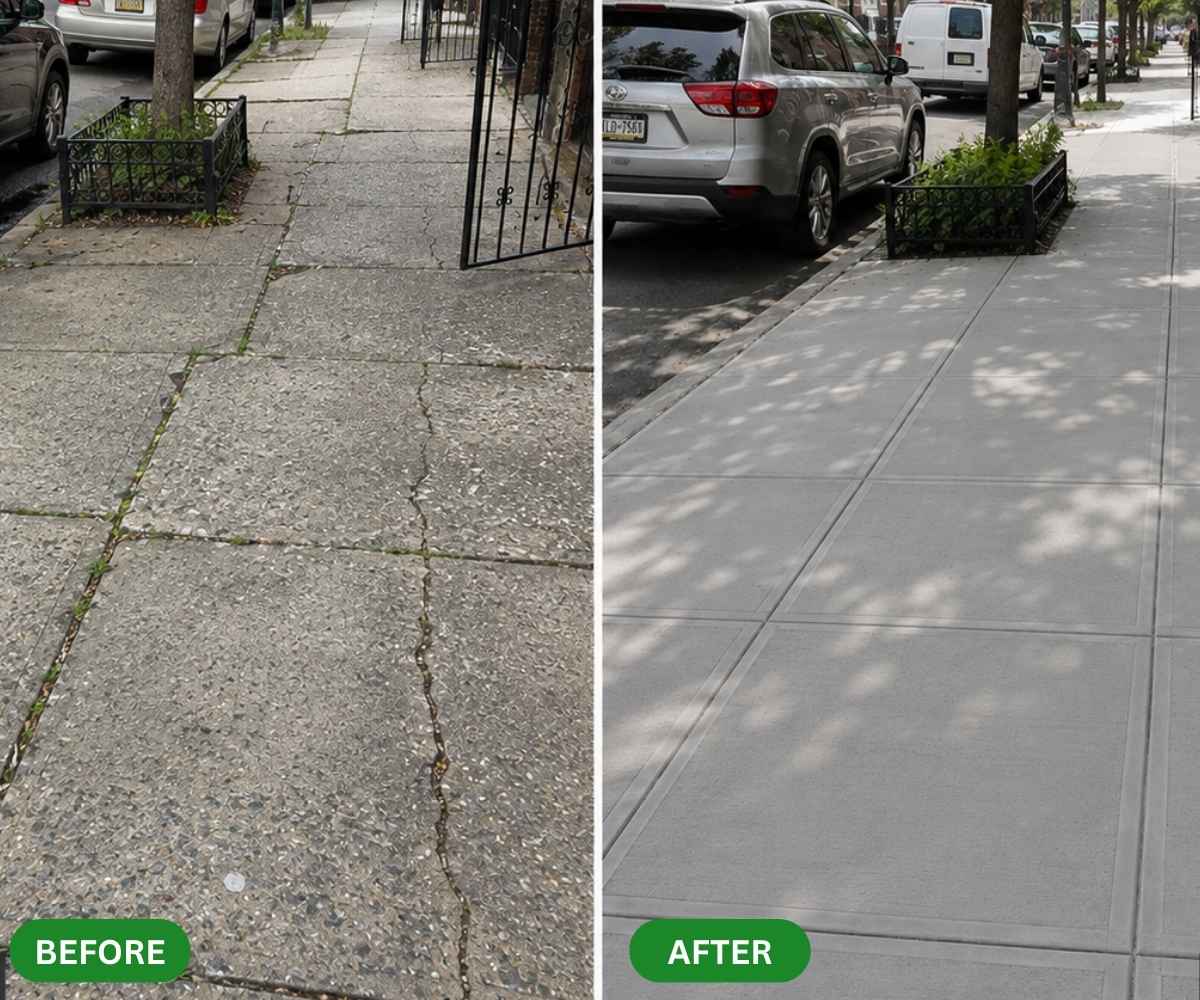
The result was visible from the curb. Slabs had heaved several inches out of plane, tilting against one another and opening abrupt vertical lips where panels met. A few sections had buckled outright, cracking along the pressure lines directly above the heaviest root runs. What had once been a flat walkway had turned into a series of steps and edges nobody expects to encounter mid-stride.
Uneven concrete of that kind is among the most common causes of sidewalk trip incidents, and it's exactly what a city inspector flags. The property owner received a violation notice citing the defective condition, with a correction period attached and, under NYC's sidewalk maintenance rules, responsibility for the repair falling to the owner, even though the tree causing it belongs to the city.
Why This Repair Needed the Right Approach, Not Just a Fast One
Root damage adds a layer most sidewalk violations don't have. The concrete isn't the whole problem, it's the symptom. Tear out the slabs, pour new ones directly over the same root mass, and the new sidewalk starts lifting on the same schedule as the old one. Owners who take the cheapest bid on a root job frequently pay for the same repair twice.
There's a regulatory dimension too. The tree is city property, and roots on city trees can't simply be cut back at a contractor's discretion. Work near them has to be handled under NYC Parks requirements and with proper arborist involvement. Cutting the wrong roots, or too many, risks damaging or destabilizing a protected tree, and that carries its own penalties separate from the sidewalk violation.
Meanwhile the ordinary clock keeps running. Fines accrue as the correction period passes. The city can send its own crew, complete the work, and bill the owner at rates well above private-contractor pricing. And a heaved walkway in front of an occupied home stays a live trip hazard, with the condition already documented in an open violation, until the day it's replaced.
Removing the Cause Before Replacing the Concrete
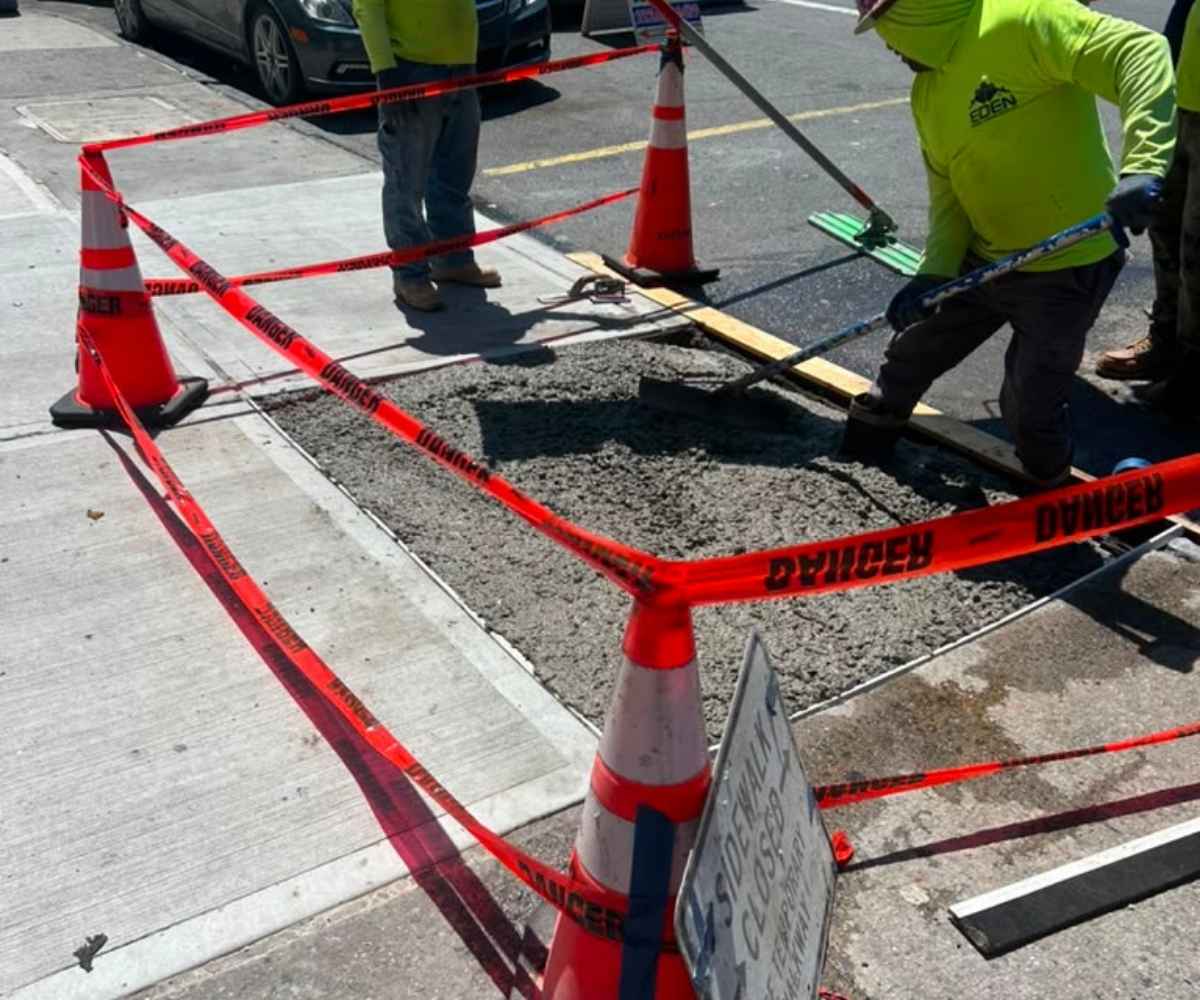
Our assessment identified nine slabs, roughly 225 square feet, displaced beyond any prospect of grinding or patching. When panels have lifted several inches, shaving the high edges only buys a season and leaves the underlying cause untouched. Full removal and replacement was the only route to a lasting result.
We filed the NYC DOT sidewalk repair permit, $140, and scheduled the work with room to spare inside the correction window.
The crew broke out and hauled away the nine heaved slabs, exposing the root system responsible. Root pruning was then carried out in coordination with an authorized arborist and in line with NYC Parks requirements, cutting back the intruding growth to a degree that relieved pressure on the walkway while preserving the health and stability of the tree. That coordination is what separates a compliant root job from one that trades a sidewalk violation for a tree violation.
With the roots addressed, we installed a root barrier along the affected run. The barrier redirects future growth downward and away from the underside of the concrete rather than allowing it to track back toward the walkway. Roots don't stop growing because a sidewalk was replaced, so the barrier is what makes this repair different from the one that would otherwise be needed again in a decade.
The subbase was then graded and compacted, and new sidewalk was poured in 4,000 PSI reinforced concrete, specified for the compressive strength and internal reinforcement a walkway over an active root zone needs. The crew finished the surface level and continuous across all nine panels, with the lips and step-ups fully eliminated.
Pedestrian access along the frontage stayed open throughout, and the finished project cleared the violation inside the 75-day correction period.
What the Project Delivered
- 9 heaved and buckled slabs removed and replaced, approximately 225 square feet of new sidewalk
- Root pruning completed with an authorized arborist under applicable NYC Parks requirements
- Root barrier installed to redirect future growth away from the concrete
- Subbase graded and compacted ahead of the pour
- 4,000 PSI reinforced concrete specified for strength and long-term resistance to root pressure
- Level, continuous walking surface restored with vertical lips and trip edges eliminated
- Violation resolved within the city's 75-day correction period
- Total cost held at $4,500, permit included
- Owner cleared of mounting fines, city-billed repair costs, and standing liability exposure
The frontage now reads flat from end to end, with the cause of the damage handled rather than paved over.
In the Owner's Words
"The tree's been there longer than I have, and I had no idea I was the one on the hook for what its roots were doing to my sidewalk," the property owner said. "They dealt with the roots the right way, put in the barrier, and poured new concrete. It's level again, and I'm not expecting to redo this in ten years."
Dealing With a Cracked, Heaved, or Uneven Sidewalk?
Root pressure, settling, and years of weather all end the same way: broken concrete and a violation notice with a deadline on it. We handle the full scope, from assessment and permit filing through demolition, root work, subbase preparation, and a reinforced 4,000 PSI pour built to hold.
Learn more about our concrete sidewalk repair services, or reach out for a free on-site evaluation and a firm quote before your correction period runs down.