Project: Sidewalk Violation Removal and Tree Root Damage Repair in Brooklyn, NY
Client: Residential Property / Historic Brownstone Owner
Location: 117 MacDonough St, Bedford-Stuyvesant, Brooklyn, NY 11216
Services Provided: NYC DOT Sidewalk Repair, Sidewalk Violation Removal, Permit Filing and Expediting, LPC Review and Approval, Sidewalk Closing Permit, 811 Utility Mark-Out, Root Pruning, Root Barrier Installation, Concrete Replacement, Final DOT Sign-Off
Estimated Project Cost: $4500, including approximately $140 for sidewalk repair permits
Total Sidewalk Area Repaired: Approximately 150 square feet / 6 slabs
Project Completion Time: Completed within the correction period specified in the NYC DOT violation notice
The Root Damage Behind the Sidewalk Violation
Located on a tree-lined residential block in Bedford-Stuyvesant, 117 MacDonough St is a historic brownstone within the Stuyvesant Heights Historic District. The combination of historic-district requirements and sidewalk damage associated with a mature street tree made this project more involved than a typical concrete replacement.
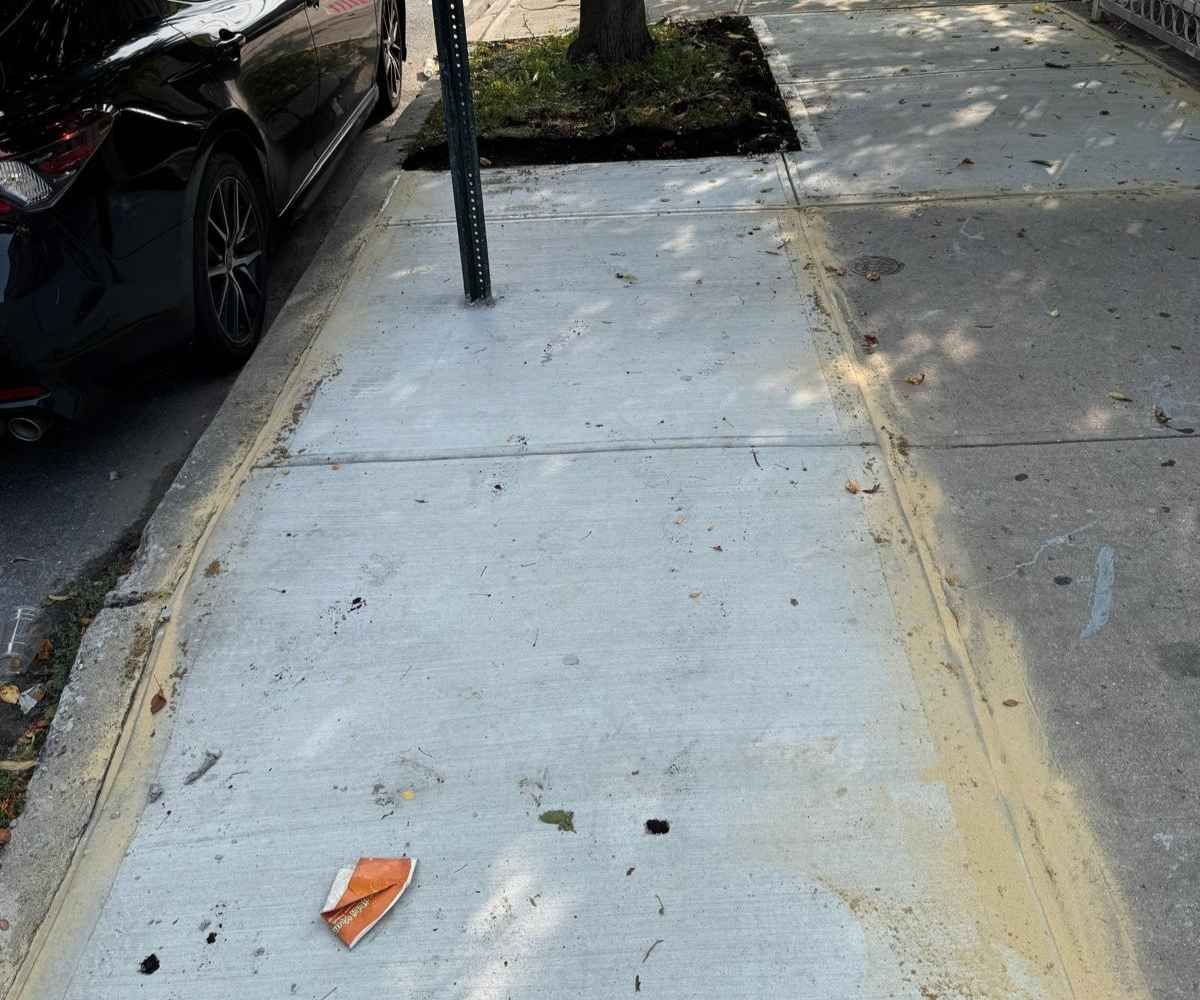
The sidewalk had 6 deteriorated slabs covering approximately 150 square feet. Over time, expanding tree roots beneath the sidewalk had pushed against sections of concrete, contributing to lifted, uneven, and cracked slabs. Weather exposure, seasonal freeze-thaw cycles, and regular pedestrian use further accelerated the deterioration.
Replacing the concrete alone would not have addressed the underlying issue. Without managing the root conditions beneath the sidewalk, new slabs could eventually experience the same upward pressure.
The project therefore required a coordinated approach that considered tree preservation, root management, historic streetscape character, pedestrian safety, and NYC DOT requirements.
Because the property is within an NYC-designated historic district, applicable Landmarks Preservation Commission (LPC) requirements also had to be considered before moving forward with the sidewalk replacement.
Our Repair Approach Built Around Long-Term Prevention
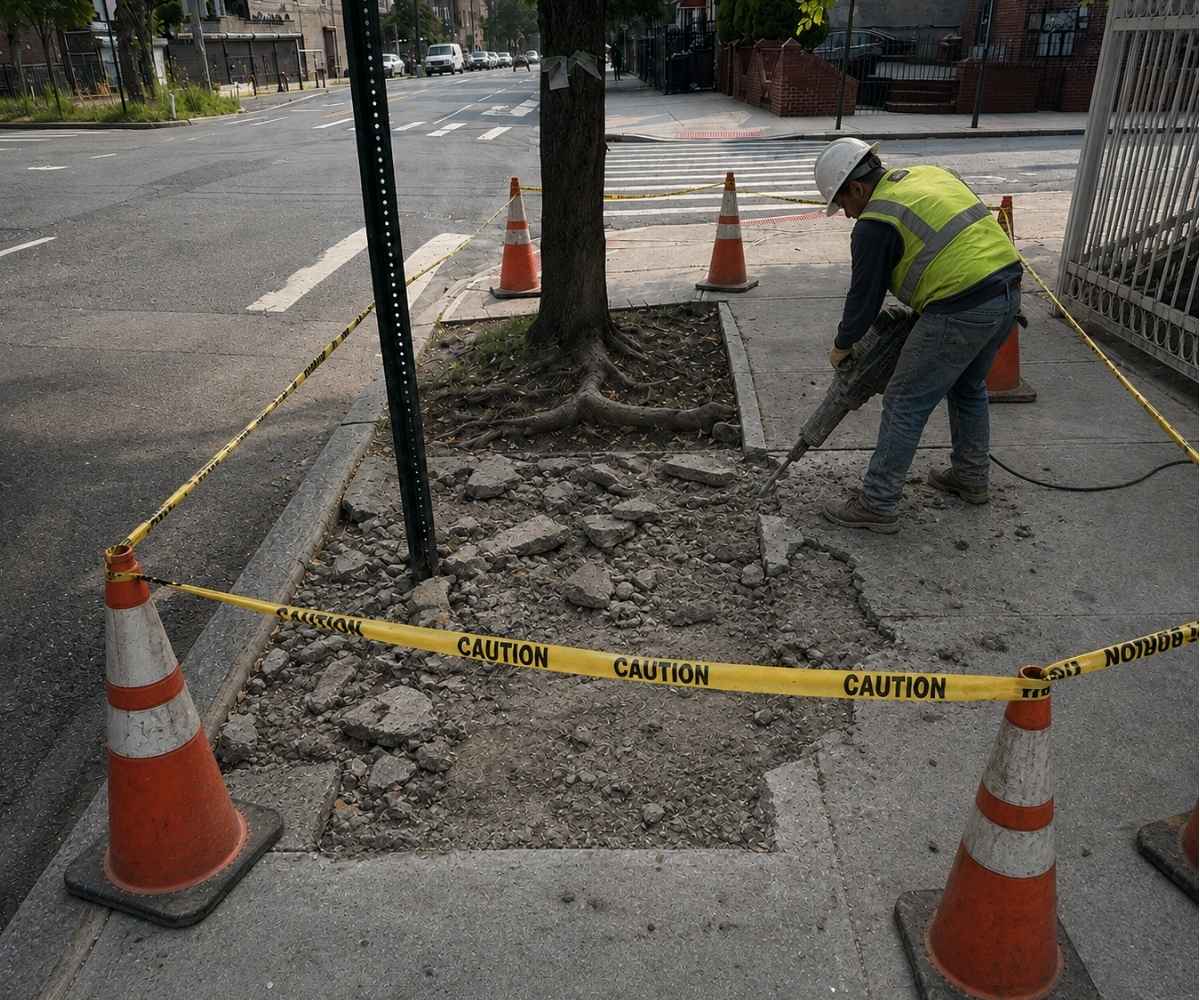
Instead of approaching the project as a basic demolition-and-pour job, our team planned the repair around root management, historic preservation, regulatory compliance, and long-term sidewalk performance.
- Permits and approvals coordinated upfront: Required NYC DOT sidewalk permits, sidewalk closing authorization, applicable LPC requirements, and an 811 utility mark-out ticket were addressed before excavation. Where work affected a city-owned street tree or its roots, the applicable NYC Parks requirements were also considered before root work proceeded.
- Damaged slabs carefully removed: All 6 affected sidewalk slabs were broken out and removed, exposing the underlying base and allowing the crew to identify where root growth was contributing to displacement.
- Tree roots addressed before repouring: Where permitted and appropriate, root pruning was performed to manage problematic roots contributing to sidewalk uplift while avoiding unnecessary disturbance to the tree.
- Root barrier installed: A root barrier was installed where site conditions allowed to help redirect future root growth away from the replacement sidewalk and reduce the likelihood of recurring slab displacement.
- Subbase properly prepared: After completing the root-related work, the exposed base was graded and properly compacted to provide stable, even support beneath the replacement concrete.
- Full slab replacement: Approximately 150 square feet of new concrete across 6 slabs was installed rather than relying on temporary patches or surface repairs.
- Broom finish applied: The replacement sidewalk received a durable broom finish appropriate for regular pedestrian traffic while maintaining a natural appearance compatible with the surrounding streetscape.
- Historic character considered: Since the property sits within the Stuyvesant Heights Historic District, the repair was planned to maintain visual continuity with the established sidewalk and historic brownstone setting.
What made this project unique was that the repair addressed both the visible sidewalk damage and the underlying tree-root pressure. Combining root management with proper base preparation and full concrete replacement provided a more preventative approach than simply pouring new concrete over the same problem.
The Results We Delivered
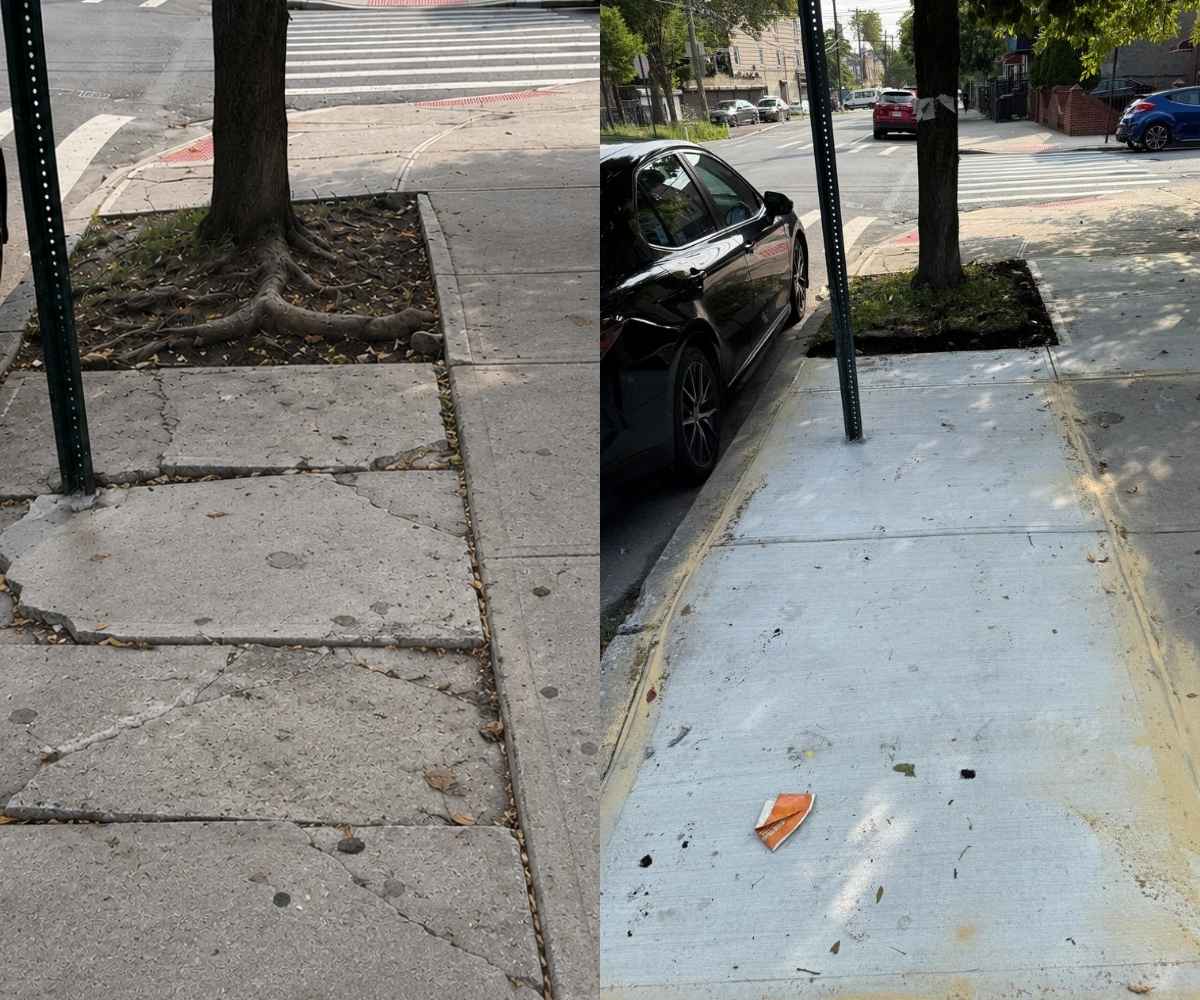
- Replaced 6 tree-root-damaged sidewalk slabs covering approximately 150 square feet.
- Eliminated lifted, cracked, and uneven walking surfaces along the property frontage.
- Addressed underlying root conditions before installing the replacement concrete.
- Performed appropriate root pruning as part of the root-management strategy.
- Installed a root barrier to help redirect future root growth away from the new sidewalk.
- Regraded and properly compacted the subbase to provide stable support.
- Installed new concrete with a durable broom finish suited to pedestrian use.
- Coordinated applicable NYC DOT permits, 811 utility mark-out, historic-district requirements, and tree-related considerations.
- Preserved the visual continuity of the surrounding Stuyvesant Heights historic streetscape.
- Managed the post-repair process toward official NYC DOT sidewalk violation clearance.
Instead of providing a short-term cosmetic fix, the completed project focused on reducing the conditions that contributed to the original failure while restoring a safer and more even sidewalk in front of the historic property.
Client Feedback
“They made what seemed like a complicated repair much easier for us. The team handled the sidewalk, tree-root issues, and historic-district requirements together, and the finished concrete fits naturally with the property.” (Property Owner, Brooklyn)
Need Sidewalk Repair for a Brooklyn Landmark Property?
If tree roots or damaged concrete have caused a sidewalk violation at your historic property, our landmark sidewalk repair service can help with repairs, permit coordination, historic-district requirements, and violation clearance.
Call 718-475-6280 today for a free written estimate.