Client: Residential property owner
Project Type: Concrete Sidewalk Repair in Brooklyn, NY
Property Address: 231 Calyer St, Brooklyn, NY 11222
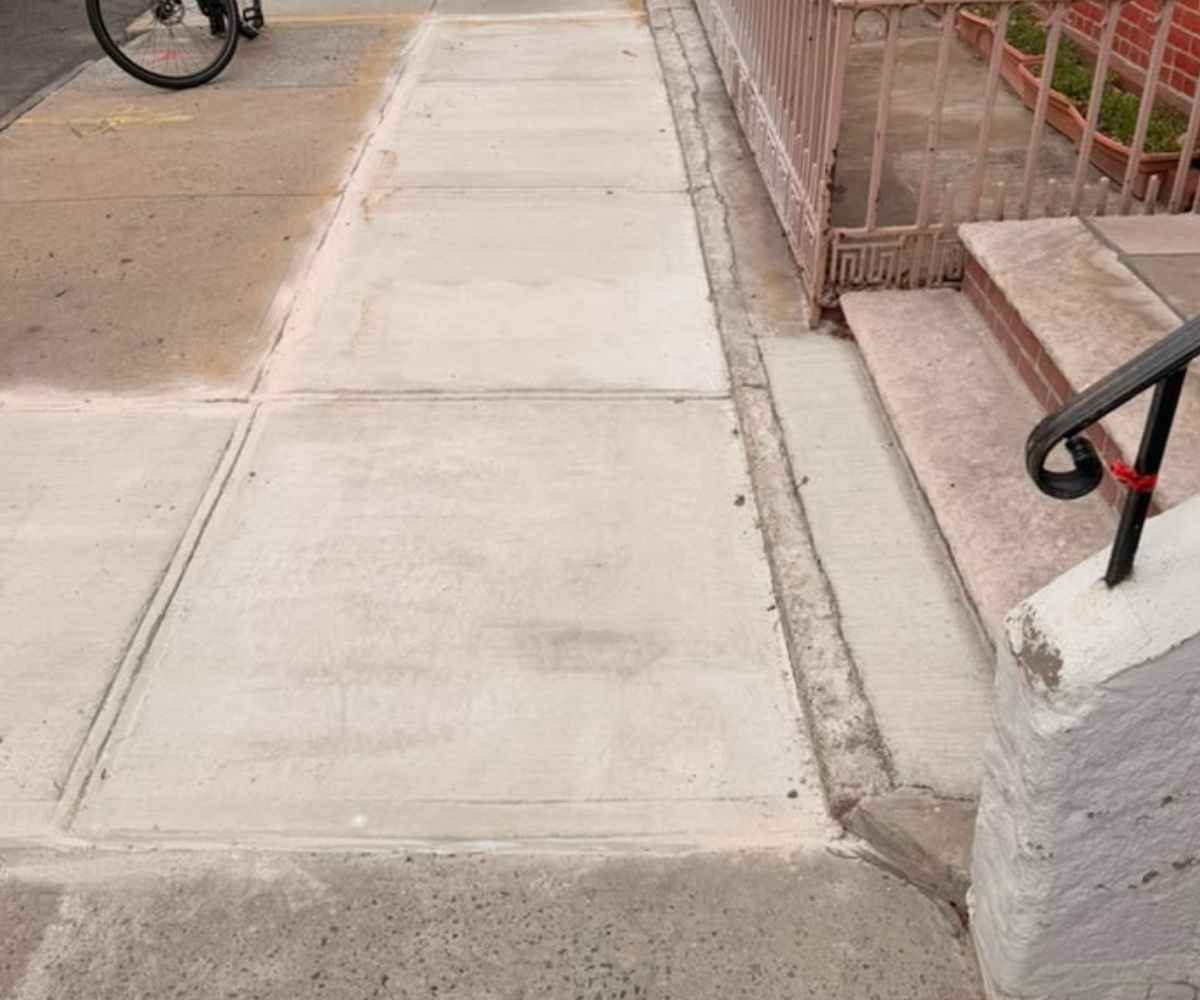
Total Area Repaired: 5 sidewalk slabs, approximately 125 square feet
Estimated Project Cost: $3,500, including approximately $140 for the sidewalk repair permit
Project Timeline: Completed within the 75-day correction period specified in the violation notice
Years of Wear Catching Up With the Concrete
The walkway fronting 231 Calyer carried the kind of load that never lets up: residents heading out in the morning, neighbors passing through, deliveries, strollers, and dogs on leads. Concrete handles that indefinitely when it's sound. When it isn't, steady use becomes the thing that finishes it off.
Weather did the slower damage. Water finding its way into hairline fractures, freezing overnight and expanding, thawing and repeating the cycle every winter, gradually prying small cracks into wide ones. Summer heat pushed the panels the other direction. Without room to move, the concrete relieved that pressure the only way it could, by breaking.
By the time the condition drew attention, several sections had cracked clean through, and a few had broken badly enough that the panels no longer sat flush with one another. The result was an uneven walking surface with lips and gaps at the joints, the sort of defect that reads as minor until someone catches a toe on it. On a residential frontage in daily use, that's an everyday hazard rather than a cosmetic complaint.
The condition met the threshold for a violation. The property owner received a notice from the city citing the defective sidewalk, with a fixed correction period and, under NYC's maintenance rules, full responsibility for the repair sitting with the owner.
The Case for Acting Inside the Window
Once a violation is issued, the correction period is the only part of the timeline the owner controls. Everything that follows a missed deadline gets more expensive.
Fines mount as the window elapses. Beyond that, the city reserves the right to dispatch its own contractor, complete the work, and invoice the owner afterward, typically at a figure well above what the same footage costs through a private crew hired directly. The owner loses the pricing, the scheduling, and any say in how the work gets done.
There's a liability dimension that runs alongside the paperwork. A cracked, misaligned walkway in front of an occupied home is a live trip hazard until the day it's replaced. If someone goes down on it, the fact that the condition was already documented in an open violation is not a helpful detail for the property owner. Addressing it early closes the exposure and the notice at the same time.
Rebuilding the Walkway From the Base Up
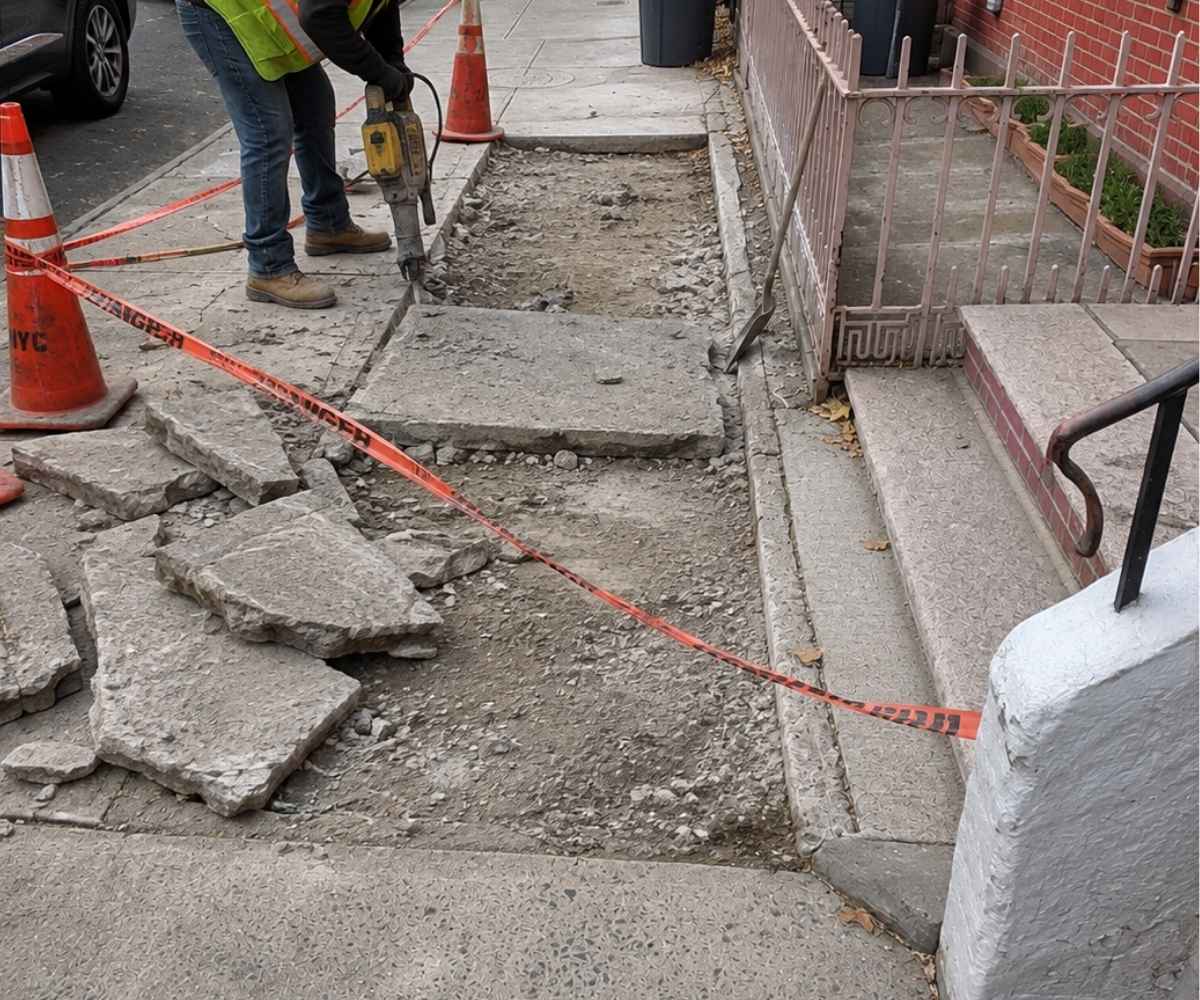
Our assessment of the frontage identified five slabs, roughly 125 square feet, that were past the point of repair. Where cracking runs full depth and panels have shifted out of plane, patching or resurfacing only conceals the problem for a season or two. Full removal and replacement was the approach that would hold.
We filed the NYC DOT sidewalk repair permit, roughly $140, and scheduled the work once approval came through, keeping the project comfortably inside the correction period rather than pressing against it.
The crew broke out and removed the five failed slabs, then turned to the ground underneath. The subbase was graded and thoroughly compacted before anything was poured, which is the step that determines whether new concrete stays level or begins settling within a few seasons. A poured slab is only as stable as what supports it.
New concrete went down at a 4,000 PSI mix, specified for the compressive strength a public walkway needs to take constant pedestrian load and seasonal weather without breaking down early. The crew finished the surface level and flush across all five panels, with no lip at any joint.
Expansion joints were cut and set at the correct intervals as part of the pour. Concrete expands in heat and contracts in cold no matter how well it's placed. Joints give that movement a controlled place to go, so the slab relieves stress at the joint line instead of cracking somewhere across the middle. It's a detail that gets skipped on cut-rate jobs and shows up as failed concrete a few winters later.
Access along the frontage was maintained throughout so residents and passersby were never cut off. The finished project cleared the violation inside the 75-day correction period.
What the Owner Ended Up With
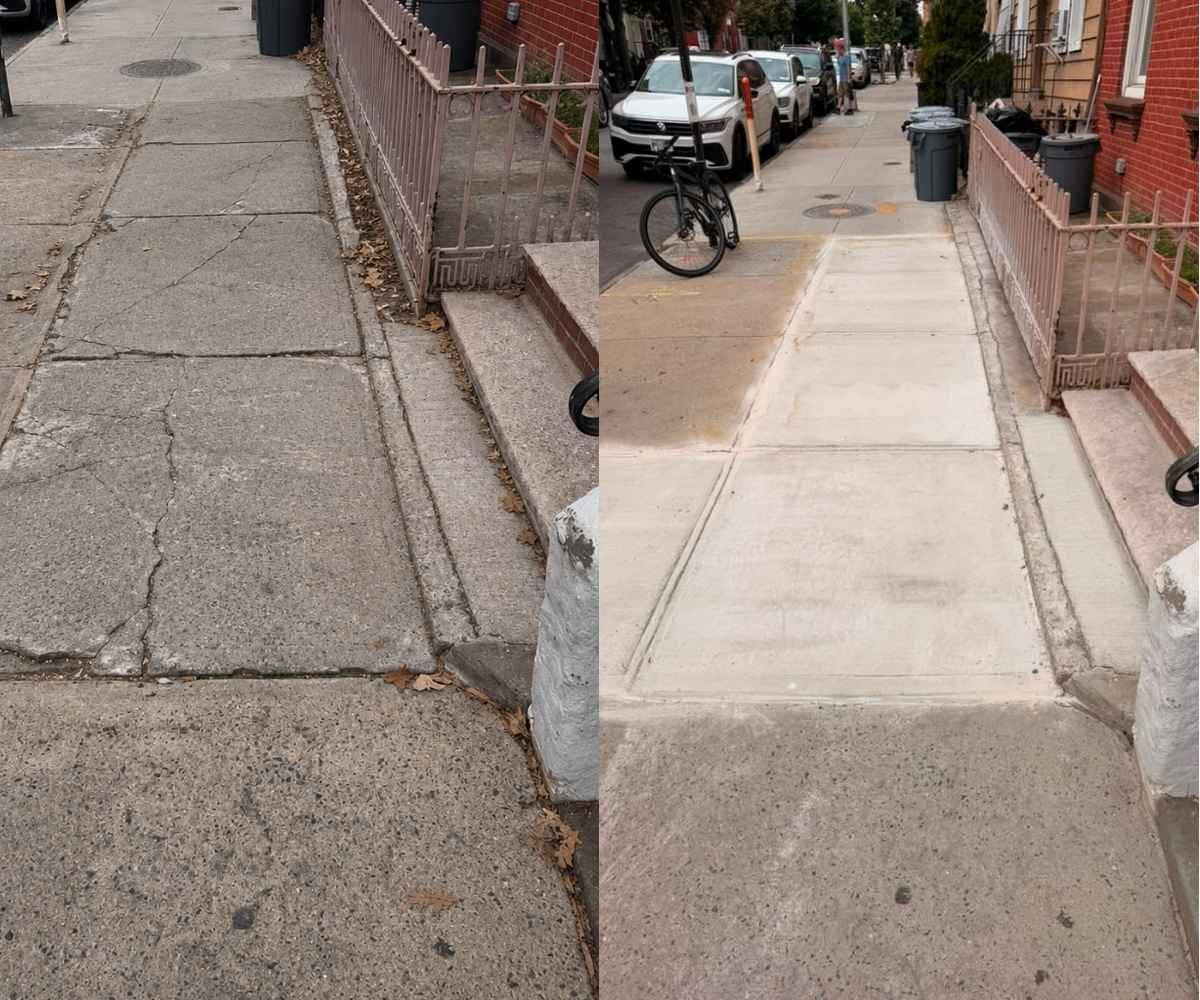
- 5 deteriorated slabs demolished and replaced, approximately 125 square feet of new sidewalk
- Subbase graded and fully compacted before the pour to prevent future settling
- 4,000 PSI concrete specified for durability under continuous foot traffic and weather exposure
- Expansion joints installed at proper intervals to manage movement and limit future cracking
- Uneven joints and trip hazards eliminated across the full frontage
- Violation resolved within the city's 75-day correction period
- Total cost held at $3,500, permit included
- Owner cleared of accumulating fines, city-billed repair costs, and ongoing liability exposure
The frontage now presents a level, continuous concrete surface built to hold up rather than to look acceptable for a season.
In the Owner's Words
"I'd been stepping over the same broken section for years and finally got a notice about it," the property owner said. "The crew pulled it out, prepped everything underneath, and had new concrete down without much fuss. It's flat, it's solid, and the violation is closed. That's all I wanted."
Dealing With Cracked or Broken Concrete at Your Property?
Full-depth cracks, sunken panels, and lifted joints don't stabilize on their own, and a violation notice puts a deadline on fixing them. We handle the job end to end: assessment, permit filing, demolition, subbase preparation, and a properly jointed 4,000 PSI pour built to last.
See more about our concrete repair services, or get in touch for a free on-site evaluation and a firm quote well before your correction period runs out.